Chemistry only
For healthy growth
and development plants need to take in a variety of minerals through their roots from the
soil. These minerals
include: nitrogen (N), phosphorus (P),
potassium (K), calcium (Ca), magnesium (Mg), sulfur (S) ,iron (Fe), chloride (Cl),
manganese (Mn), zinc (Zn), copper (Cu), nickel (Ni) as well many other elements. Most of these
elements are found as soluble
ionic compounds in the soil. This means that plants are
absorbing essential ions from the soil through their roots.
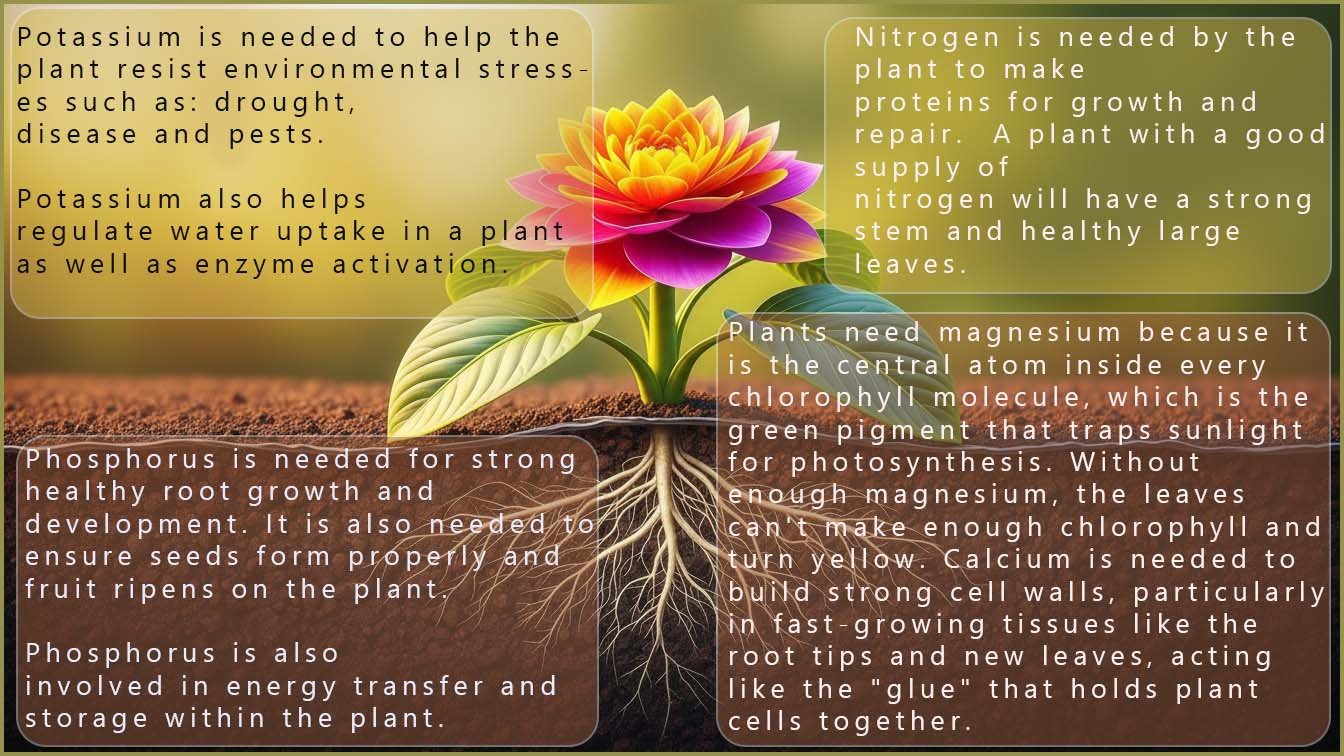
You may think that plants could simply use the nitrogen from the air as their source of this particular essential element. Unfortunately this is not the case; simply because atmospheric nitrogen is a very unreactive gas and most plants except some plants called leguminous plants are unable to use atmospheric nitrogen. Leguminous plants such as clover and some bean plants have nodules (swellings) on their roots that contain bacteria that can convert atmospheric nitrogen into nitrates (NO3-); which acts as a source of nitrogen for the plant. Most plants however rely on a source of nitrate ions (NO3-) in the soil which they take in through their roots, these nitrate ions acts as a source of nitrogen for the plant. This nitrogen is essential for the manufacture of proteins by the plant.
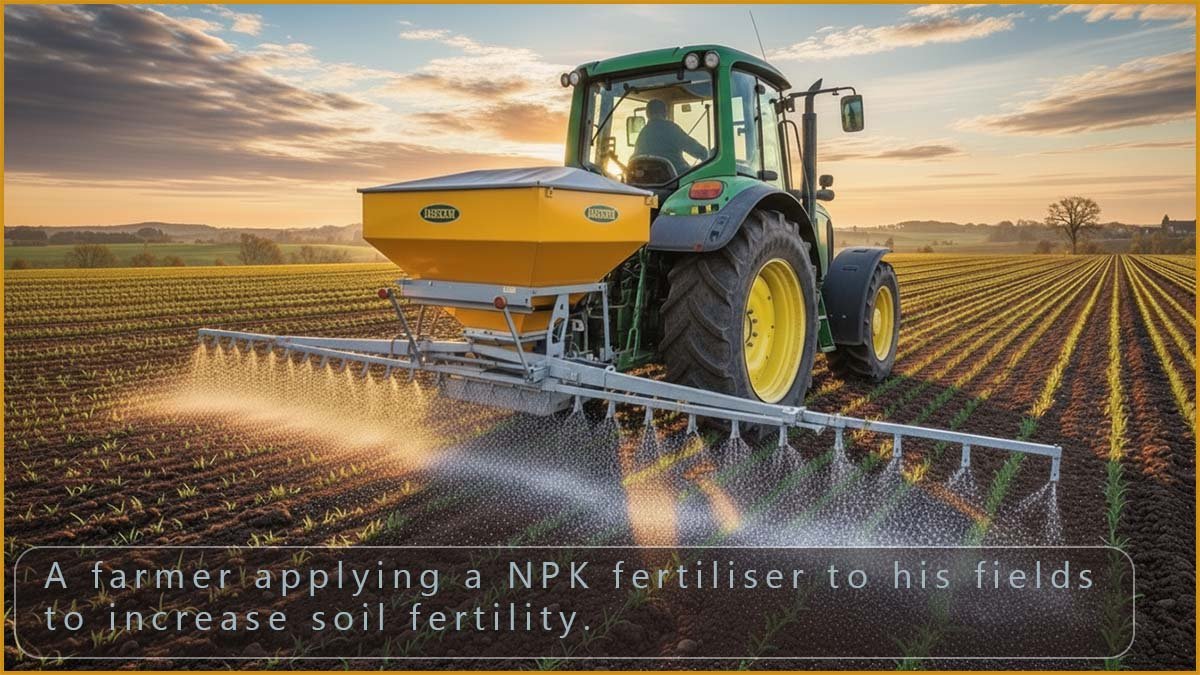
Farmers need to replace essential minerals that are removed from the soil when crops are harvested. If the soil is not fertilised then any new crops which are planted will likely grow and develop in a poor condition and crop yields would likely be low due to the lack of essential nutrients and minerals in the soil. Farmers will add fertilisers to their fields to ensure there are sufficient minerals present for healthy plant growth. Most fertilisers are solids; normally powders or often they consist of small granules called prills. Fertilisers are mostly ionic compounds such as:
Most fertilisers are sold as a mixture of many different compounds; they will likely contain many of the substances
from the list above. These different mixes of
compounds will contain different amounts of nitrogen,
phosphorus and potassium. Depending on what crops are being
grown and on the condition of the soil the farmer will chose a
fertiliser with a specific
N:P:K content that will maximise
his yield of crops. In the image below you can see that the N:P:K
content of each of the fertilisers is different;
so each particular fertiliser maybe suitable for use with different
crops or soil types.
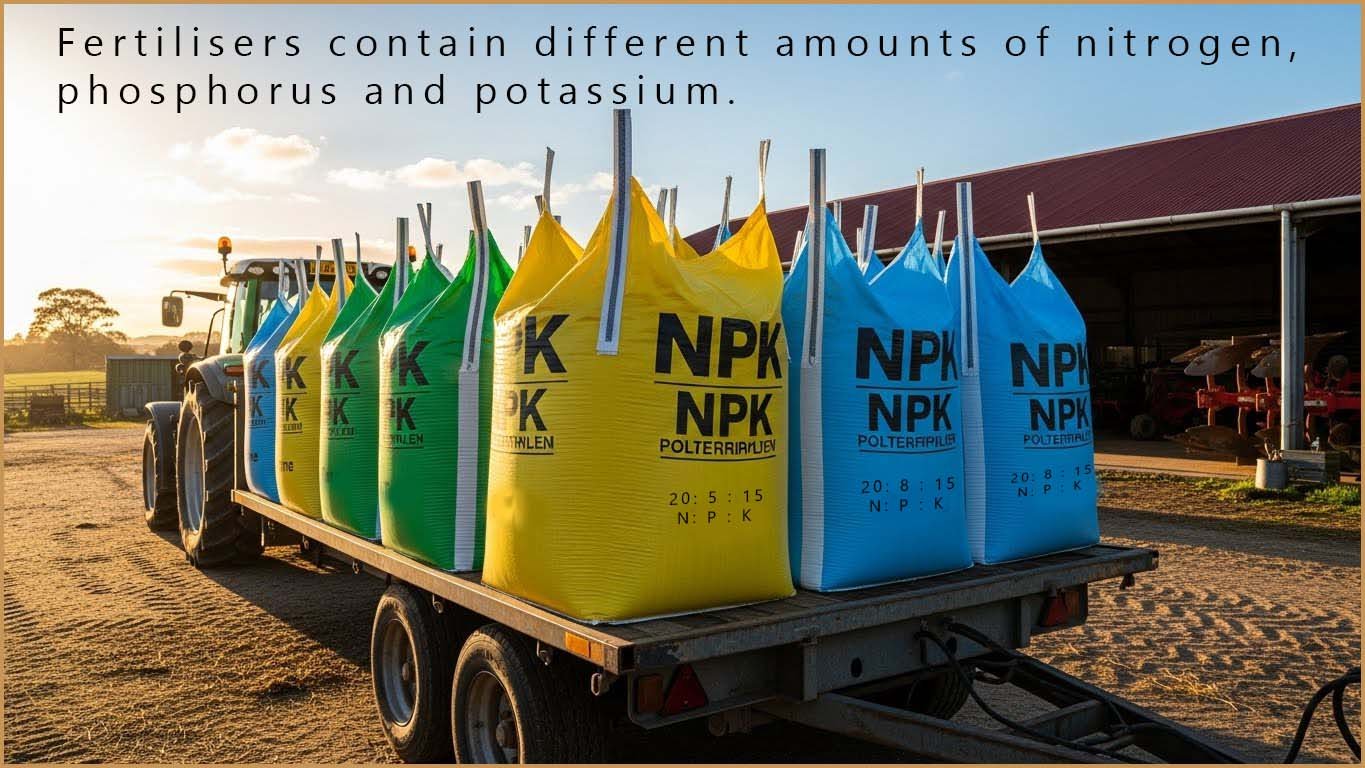
In the image above the bags of fertiliser have labels that indicate the amount of nitrogen (N), phosphorus(P) and potassium present in each fertiliser bag, but what do these numbers actually mean and how can we use them to calculate the amount of nitrogen, phosphorus and potassium present in the fertiliser? Well complete the activity below to answer this question:
NPK labels tell you the percentage by mass of nitrogen (N), phosphorus (P) and potassium (K) in a fertiliser.
A fertiliser is labelled 12–6–6. Enter the mass of the bag in kilograms and click calculate to see how much nitrogen it contains.
Q1. A fertiliser is labelled 10–5–10 and the bag has a mass of 20 kg. How much nitrogen does it contain?
Q2. A fertiliser is labelled 8–4–12. Which number shows the percentage of potassium (K)?
Q3. A 25 kg bag of fertiliser is labelled 20–10–10. Which statement is correct?
And finally
Test yourself on what happens when phosphate rock reacts with different acids. Click an answer to check if you are right.
The actual reactions taking place here are fairly complex and are very unlikely to be asked for in a gcse chemistry paper. As an example consider the industrial preparation of superphosphate (calcium sulfate/calcium phosphate mixture). The bullet points below give a rough outline of the processes that need to be considered in the manufacture of superphosphate fertiliser.
Match up each of the essential minerals below with its function in the plant.
Click a fertiliser component on the left, then click its main role on the right.
For each of the plant problems shown below suggest the correct fertiliser treatment needed.
Read each farmer’s problem and choose the most suitable fertiliser or nutrient.
Before you try the practice quick quiz or the questions on fertilisers below check out the following misconceptions that many students have regarding fertilisers:
Read each statement and click on the one you think is true. Each one hides a common misconception. The correct idea is revealed underneath.
Most plants cannot use nitrogen gas from the air. They absorb nitrogen as nitrate ions from the soil solution through their roots. Only bacteria in the soil or in root nodules of leguminous plants can convert nitrogen gas into nitrates that plants can use.
On an NPK label each number is already a percentage by mass. A 10–5–10 fertiliser contains 10 percent nitrogen, 5 percent phosphorus and 10 percent potassium. You do not add the numbers together and then convert to a percentage.
Phosphate rock is insoluble in water so plant roots cannot absorb it. It has to be reacted with acids such as sulfuric acid or nitric acid to make soluble phosphate fertilisers like superphosphate or calcium nitrate and phosphoric acid.
Superphosphate is made by reacting phosphate rock with sulfuric acid to form a mixture of calcium sulfate and calcium phosphate compounds. Nitric acid produces calcium nitrate and phosphoric acid instead.
Leguminous plants still need nitrogen. Bacteria in their root nodules convert nitrogen gas into nitrates. The plant then takes in these nitrate ions as a source of nitrogen for making proteins, just like other plants.